Friday, December 13, 2013

Writing Influences: Latin America

There is a strong thread of Spanish woven into my life. My first memories are of Madrid when I was 3. I had a nanny named Teresa who cared for me when my mother went out to the markets and my father was at work. I consider Spanish as much a mother tongue as English.

After studying Latin for two years in high school, I switched to Spanish. By the end of my senior year I was able to read, but without much understanding, Nada Mas Que Todo Un Hombre by Miguel de Unamuno, and a short book of poems by the Nicaraguan poet Ruben Dario. Something about reading in another language felt like stumbling into another world, and I was hooked.

In college I took a Spanish literature class and was introduced to the short stories of Julio Cortazar, who is Argentine but did all his writing in Paris. One of his stories became an obsession: "El Otro Cielo," (The Other Sky,) which appears in Todos Los Fuegos el Fuego (All Fires the Fire), first published in 1966.

"El Otro Cielo" tells the story of a young man who works at the Stock Exchange in 20th century Buenos Aires. He sees his conventional future spread out before him and wants to run for the hills. Instead, he disappears into one of the neighborhoods on the seedier side of town and, without much effort, finds himself in 19th century Paris with a girlfriend named Josiane who happens to be a prostitute and who fears for her life because a serial killer known as "Laurent" has been killing prostitutes. The completely naturalistic way the story is told, and the lack of "device" or explanation for how the narrator goes from one world to the other, opened my eyes to a storytelling style that I would soon learn to call "magical realism." Supernatural things happen, but they're accepted as just a normal part of life.

I was on fire about this way of writing, and began experimenting with it on my own. The first of my novels to be put in a drawer (we all have them), Calypsody/ Collapsody, was inspired in large part by Rayuela (Hopscotch), an ingenious novel that Cortazar considered "a failure."

Of course, I eventually learned about Jorge Luis Borges, Mario Vargas Llosa, and Gabriel Garcia Marquez, along with a host of lesser-known Latin American writers. One of these writers, Augusto Roa Bastos, wrote an untranslatable book, Yo, El Supremo that eventually got me my first literary agent, Tom Colchie.
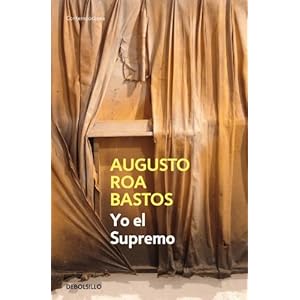
Yo el supremo / I The Supreme (Spanish Edition)
After receiving a Master of Arts in Comparative Literature, I took a job in publishing and began an informal "lunch-hour salon" once a week with several literarily-minded, aspiring-writer colleagues. I translated a selection of about 10 pages from Yo, El Supremo and discussed my love of Latin American literature at the salon. One of  my colleagues dropped a New York Times interview with Colchie on my desk one day, and before I knew it, I was calling him to see if Roa Bastos was a client. He said the Paraguayan author was not currently a client, but he would look into representing him. In the meantime, he had some other projects in the works and was always looking for translators....

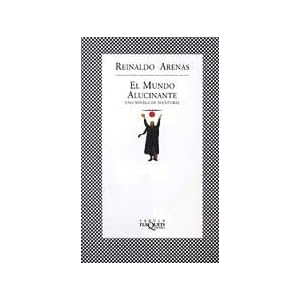
The process of being selected to translate a book - at least for me, back then - was similar to the process my actor friends were going through: I had to "audition" with translated sample pages, and if an editor liked them, he or she would sign Colchie's author and attach me as translator. I had a number of auditions, and discovered a number of authors, including the late Reinaldo Arenas (best known for Before Night Falls), who wrote two books that I consider hidden gems, if not minor masterpieces: El Mundo Alucinante (Hallucinations) and Celestino Antes del Alba (Celestino Before the Dawn)

El Mundo Alucinante/A Hallucinations (Fabula) (Spanish Edition)I was so taken with the character of Celestino, that I began to imagine the character as a franchise! I've written the first successor to Arenas' novel, in the form of a short story: "Celestino in the Lemon Yellow Nova."

Similar to the books about Africa I talked about in a previous post, my love affair with the "magical realist" style of writing made it possible for me to figure out a naturalistic way for the character of Hawk, protagonist of The Shell, to slip effortlessly from one realm to another and back again....

Friday, December 6, 2013

Writing Influences: Africa

This morning Julie, my co-writer, asked what possessed me to pick up a copy of City of Secrets (Quest Books, 2008) by Patrice Chaplin? The answer was complicated, and led me to start thinking about how to describe all the influences that led me to write The Shell, the first book in our Turtle Island Rising series.

  • What drew me to look in the bargain bin at Vroman's Bookstore several years ago and pick up a copy of Stanley: The Impossible Life of Africa's Greatest Explorer (Yale University Press, 2007) by Tim Jeal? 
  • Why did a female co-worker give me a copy of Beryl Markham's West with the Night (North Point Press, 1983) for my 33rd birthday? 
  • Why did my 12th grade English teacher take the time to patiently suggest several books to a diffident young man who thought he didn't much like "literature," only to have a passion for literature ignited by one of her suggestions, Cry, the Beloved Country (Scribner's, 1948) by Alan Paton?
The short answer to all these questions is: I don't really know. But I will tell you that I believe that something - guidance, intuition, Fate, call it what you will - led me to all of them.

I was already well into the writing of The Shell when I picked up that masterful biography of Sir Henry Morton Stanley, whose real name was John Rowlands and who is best known - if at all - for the phrase, "Dr. Livingston, I presume?" I knew that I was writing an "adventure story," which critic Don D'Ammassa defines as: 
"...an event or series of events that happens outside the course of the protagonists's ordinary life, usually accompanied by danger, often by physical action. Adventure stories almost always move quickly, and the pace of the plot is at least as imporant as characterization, setting and other elements of a creative work." (Encyclopedia of Adventure Fiction, Infobase Publishing, 2009)
So maybe it was the blurb by Paul Theroux on the book's cover that made me pick it up: "Magnificent....A superb adventure story." It may also have been the cover photo, which shows Stanley in the quintessential African explorer's garb - pith helmet, rifle, mustache, puttees - standing next to an African boy of about 12 or 13, naked from the waist up. When I finished the book, I knew that the real reason had more to do with a story of "first contact" between Europeans and Africans.

West with the night [Book]West with the Night had the same appeal: an eyewitness account of a still wild Africa about to disappear forever. Markham's memoir also spoke to a childhood fantasy of adventure and romance that my co-worker, Torrie, could have known nothing about: bush pilots in East Africa.

Cry, the Beloved Country is an emotionally-wrenching tale of what was called apartheid in South Africa and racism in the United States. The book provided me with a strong picture of the basic humanity of all people and caused me to look more deeply into the causes and persistence of injustice and intolerance. I was presented for the first time with the image and challenge of "writer as social activist."

Cry, the Beloved Country [Book]
All three books, though set on a different continent and read at different times in my life, informed my approach to writing an adventure story, set on my own continent, that has at its heart a message about humanity and justice.