Friday, December 13, 2013

Writing Influences: Latin America

There is a strong thread of Spanish woven into my life. My first memories are of Madrid when I was 3. I had a nanny named Teresa who cared for me when my mother went out to the markets and my father was at work. I consider Spanish as much a mother tongue as English.

After studying Latin for two years in high school, I switched to Spanish. By the end of my senior year I was able to read, but without much understanding, Nada Mas Que Todo Un Hombre by Miguel de Unamuno, and a short book of poems by the Nicaraguan poet Ruben Dario. Something about reading in another language felt like stumbling into another world, and I was hooked.

In college I took a Spanish literature class and was introduced to the short stories of Julio Cortazar, who is Argentine but did all his writing in Paris. One of his stories became an obsession: "El Otro Cielo," (The Other Sky,) which appears in Todos Los Fuegos el Fuego (All Fires the Fire), first published in 1966.

"El Otro Cielo" tells the story of a young man who works at the Stock Exchange in 20th century Buenos Aires. He sees his conventional future spread out before him and wants to run for the hills. Instead, he disappears into one of the neighborhoods on the seedier side of town and, without much effort, finds himself in 19th century Paris with a girlfriend named Josiane who happens to be a prostitute and who fears for her life because a serial killer known as "Laurent" has been killing prostitutes. The completely naturalistic way the story is told, and the lack of "device" or explanation for how the narrator goes from one world to the other, opened my eyes to a storytelling style that I would soon learn to call "magical realism." Supernatural things happen, but they're accepted as just a normal part of life.

I was on fire about this way of writing, and began experimenting with it on my own. The first of my novels to be put in a drawer (we all have them), Calypsody/ Collapsody, was inspired in large part by Rayuela (Hopscotch), an ingenious novel that Cortazar considered "a failure."

Of course, I eventually learned about Jorge Luis Borges, Mario Vargas Llosa, and Gabriel Garcia Marquez, along with a host of lesser-known Latin American writers. One of these writers, Augusto Roa Bastos, wrote an untranslatable book, Yo, El Supremo that eventually got me my first literary agent, Tom Colchie.
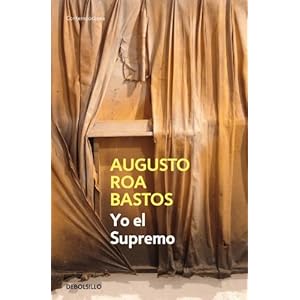
Yo el supremo / I The Supreme (Spanish Edition)
After receiving a Master of Arts in Comparative Literature, I took a job in publishing and began an informal "lunch-hour salon" once a week with several literarily-minded, aspiring-writer colleagues. I translated a selection of about 10 pages from Yo, El Supremo and discussed my love of Latin American literature at the salon. One of  my colleagues dropped a New York Times interview with Colchie on my desk one day, and before I knew it, I was calling him to see if Roa Bastos was a client. He said the Paraguayan author was not currently a client, but he would look into representing him. In the meantime, he had some other projects in the works and was always looking for translators....

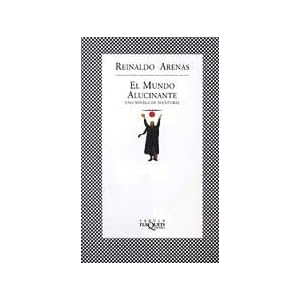
The process of being selected to translate a book - at least for me, back then - was similar to the process my actor friends were going through: I had to "audition" with translated sample pages, and if an editor liked them, he or she would sign Colchie's author and attach me as translator. I had a number of auditions, and discovered a number of authors, including the late Reinaldo Arenas (best known for Before Night Falls), who wrote two books that I consider hidden gems, if not minor masterpieces: El Mundo Alucinante (Hallucinations) and Celestino Antes del Alba (Celestino Before the Dawn)

El Mundo Alucinante/A Hallucinations (Fabula) (Spanish Edition)I was so taken with the character of Celestino, that I began to imagine the character as a franchise! I've written the first successor to Arenas' novel, in the form of a short story: "Celestino in the Lemon Yellow Nova."

Similar to the books about Africa I talked about in a previous post, my love affair with the "magical realist" style of writing made it possible for me to figure out a naturalistic way for the character of Hawk, protagonist of The Shell, to slip effortlessly from one realm to another and back again....

Friday, December 6, 2013

Writing Influences: Africa

This morning Julie, my co-writer, asked what possessed me to pick up a copy of City of Secrets (Quest Books, 2008) by Patrice Chaplin? The answer was complicated, and led me to start thinking about how to describe all the influences that led me to write The Shell, the first book in our Turtle Island Rising series.

  • What drew me to look in the bargain bin at Vroman's Bookstore several years ago and pick up a copy of Stanley: The Impossible Life of Africa's Greatest Explorer (Yale University Press, 2007) by Tim Jeal? 
  • Why did a female co-worker give me a copy of Beryl Markham's West with the Night (North Point Press, 1983) for my 33rd birthday? 
  • Why did my 12th grade English teacher take the time to patiently suggest several books to a diffident young man who thought he didn't much like "literature," only to have a passion for literature ignited by one of her suggestions, Cry, the Beloved Country (Scribner's, 1948) by Alan Paton?
The short answer to all these questions is: I don't really know. But I will tell you that I believe that something - guidance, intuition, Fate, call it what you will - led me to all of them.

I was already well into the writing of The Shell when I picked up that masterful biography of Sir Henry Morton Stanley, whose real name was John Rowlands and who is best known - if at all - for the phrase, "Dr. Livingston, I presume?" I knew that I was writing an "adventure story," which critic Don D'Ammassa defines as: 
"...an event or series of events that happens outside the course of the protagonists's ordinary life, usually accompanied by danger, often by physical action. Adventure stories almost always move quickly, and the pace of the plot is at least as imporant as characterization, setting and other elements of a creative work." (Encyclopedia of Adventure Fiction, Infobase Publishing, 2009)
So maybe it was the blurb by Paul Theroux on the book's cover that made me pick it up: "Magnificent....A superb adventure story." It may also have been the cover photo, which shows Stanley in the quintessential African explorer's garb - pith helmet, rifle, mustache, puttees - standing next to an African boy of about 12 or 13, naked from the waist up. When I finished the book, I knew that the real reason had more to do with a story of "first contact" between Europeans and Africans.

West with the night [Book]West with the Night had the same appeal: an eyewitness account of a still wild Africa about to disappear forever. Markham's memoir also spoke to a childhood fantasy of adventure and romance that my co-worker, Torrie, could have known nothing about: bush pilots in East Africa.

Cry, the Beloved Country is an emotionally-wrenching tale of what was called apartheid in South Africa and racism in the United States. The book provided me with a strong picture of the basic humanity of all people and caused me to look more deeply into the causes and persistence of injustice and intolerance. I was presented for the first time with the image and challenge of "writer as social activist."

Cry, the Beloved Country [Book]
All three books, though set on a different continent and read at different times in my life, informed my approach to writing an adventure story, set on my own continent, that has at its heart a message about humanity and justice.

Friday, November 29, 2013

Agent Search Yields New Author Discoveries

Part of the task of finding an agent is researching the kind of books and authors each agent represents. In the process of researching agents, I discovered a couple of wonderful books and authors I'd never heard of before.

PATRICK ROTHFUSS
The first of these was Patrick Rothfuss, who is represented by Matt Bialer of Sanford J. Greenberger Associates. Rothfuss has published only two novels so far, both ranked as New York Times Best Sellers. (How one achieves this ranking is a subject for another column.) Rothfuss's books, The Name of the Wind (2007, DAW Books) and The Wise Man's Fear (2011, DAW Books) are the first two volumes in THE KINGKILLER CHRONICLES. They are definitely in the fantasy genre, which "commonly uses magic and other supernatural phenomena as a primary element of plot, theme, or setting, and since the publication of The Lord of the Rings, is dominated by its medievalist form." (Wikipedia entry on "Fantasy").

Readers who enjoyed Lord of the Rings and the Harry Potter series are in for a treat when they embark on The Kingkiller Chronicles. Rothfuss has created a fascinating world which, in a sense, picks up where Potter left off. Protagonist Kvothe finds his way to the University, where he studies to be an Arcanist. The words Rothfuss invents are tremendously creative; the cultures that he creates are sophisticated and sublime -- the Adem, a mercenary culture with whom Kvothe spends time in The Wise Man's Fear, for example, are like Samurai or Knights Templar, and yet wholly different: morally, they adhere to a strict warriors' code, the Lethani, but sexually they are uninhibited; though their faces remain impassive, they've developed a highly expressive sign language; and in their society, women are considered the superior fighters. In fact, all the female characters in The Kingkiller Chronicles are more fully developed than in most fantasy fiction, at least in my experience: from the elusive Denna, to the complex Devi, to the hermetic Auri, to the enchanting (literally) Felurian, to the harsh but exciting Vashet, there are many facets of the Feminine presented and explored with respect and creativity, though I'd be interested to hear a female viewpoint (The Geektress provides one on THIS blog entry).

One final word about this author and this series. I had never heard of DAW Books, the publisher of this series. What an amazing track record! And despite the fact that their website is "hosted" by Penguin Books, which presumably distributes their books, I was heartened by their statement that:
DAW is still a small private company, owned exclusively by its publishers, Elizabeth R. Wollheim and Sheila E. Gilbert. Betsy and Sheila are strongly committed to discovering and nurturing new talent, and to keeping a personal 'family' spirit at DAW—something they feel is all too rare in today's world of international conglomerate publishing."
GRAHAM JOYCE
The second of the authors I discovered during my agent search, Graham Joyce, is represented by Douglas Stewart at Sterling Lord.

Joyce is a Brit, and a multiple British fantasy novel winner. The thing is, his novels are less fantasy than magical realism, and he himself doesn't like the label "magical realism." He says (and I'm quoting his Wikipedia page here), "that his lineage is tied more closely to writers of the English “weird tale” such as Arthur Machen or Algernon Blackwood. He calls his style of writing “Old Peculiar.” I'm reading his book about midwives in the Midlands called The Limits of Enchantment (2005, Atria). It's SO good. Set in the Sixties. "Hedgerow Witches" are what people call the protagonist, Fern, and her wise woman adoptive mother, "Mammy."

A previous title, The Facts of Life (2003, Atria), is set post-WWII and again involves a "coven," of sorts: seven women who take turns raising a young boy, conceived under unusual circumstances. There's a bit of the "weird," and a great deal of superb characterization and intrigue.

I had not heard of Atria Books founded in 2002, either. It's no wonder. Though I worked in the New York publishing world a number of years ago, the upheaval and consolidation that seemed to be well under way back then has continued, unabated, into the present. The tricky thing about publishing has always been: how to support great writing, craft wonderful books, and still make some money. Atria Books seems to be doing okay: with the Dalai Lama and Lauren Weisberger (this links to Sidewinder L.A.'s cheeky discussion of ChickLit) on your list, how could you go wrong, right?

Monday, November 25, 2013

How do I love thee? Let me count the drafts

"Out West" Photo taken by ancestors
on honeymoon in the 1920s.
The dirty little secret about writing great fiction is that, except in very rare cases, it's a lot more work than anyone who has never done it can possibly imagine. 

This is probably no secret to accomplished artists in any discipline, whether sculpture, dance, poetry, acting, photography, fashion design, cooking, yoga -- the list is long. However, accomplished artists don't want you to see the work, they want you to experience the fruits of their labor without thinking about that labor. (Be wary of Anne Hathaway's acting skills - she's too attached to having you see her acting).

I remember reading an interview with an agent - I can't remember who it was now, but I'd like to think it was Molly Friedrich, of the Friedrich Literary Agency, because she's such a straight shooter (this interview and this article from Poets & Writers should convince you) - that said something like, "Don't even begin to approach agents about representing your work until you've written at least seven drafts."

Like anyone with a normal ego, I immediately thought to myself, "Of course, that doesn't apply to me. I'm a good writer. Molly's addressing her remarks to schmucks and hacks. Certainly not to me." It will come as no shock to the aforementioned accomplished artists that Molly was, in fact, talking to me.

What counts as a draft?

Great question. I don't know if there is a definitive answer. For one thing, when you write using a word processing program on a computer, you tinker far more with your manuscript than in the days of typing on paper - or maybe not: maybe you just waste a lot less paper (remember the stock image of the writer angrily tearing a page out of the typewriter carriage, crumpling it up, and throwing it in disgust toward the wastebasket? The camera pans back, the wastebasket is overflowing and the floor, it turns out, is ankle-deep in crumpled pieces of rejected writing). 

You may count your drafts differently, but here's how I count mine:
  • First draft. You're really satisfied with what you've written, not the least bit embarrassed by any of it, and you want to know if you're delusional, or if it's as good as you think, so you share it with several readers whose opinions you value and trust.
  • Second draft. Your readers have gotten back to you; they validate that there's much to like in your manuscript, but they have some edits and some suggestions; you sort through these, take most of them into account, and take the well-intentioned but irrelevant (in your mind) with a grain of salt, produce an "edited" version of your manuscript and share it with a different group of readers.
  • Third draft. This latest group of readers begin to give you the feedback you really wanted to hear - "Clark, this is really great! It's going to be a bestseller! It's so much better than [insert name of current hot book at the top of the New York Times Bestseller List]!" Now we're talking! But your readers don't stop there: "There are just a couple of things, though, that I had questions about." Those couple - or dozen - things happen to be the very things YOU had questions about, too (whether or not you admitted it to yourself). The questions force you to think more deeply about certain characters and decide whether the cloak and dagger section in the middle - which you had such fun researching and writing - is better suited to a Pink Panther movie than this particular novel. You face some hard truths, you remember the old saw about "murdering your darlings," and you cut and rewrite and reshape and refocus, and share the resulting manuscript with yet another set of readers.
  • Fourth through nth drafts. From among your rapidly dwindling stable of readers, Fate now provides one who is not only a great editor, but who is also uncompromising. She really thinks you may be onto something, if you're willing to work for it. It is through work on these drafts, each of which your editor insists you complete before giving it to her to read, that you begin to have a glimmer of what it really means to be an author.

Friday, November 8, 2013

Understanding Archetypes: Thomas Moore

In my last post (Freedom and Reality), I said that I tried to employ a "multivalent and archetypal" narrative style in my writing, as opposed to the 19th century "realist" style developed by authors as diverse as Gustave Flaubert and Henry James, and still used by a writer like Jonathan Franzen (who appeared on the cover of Time magazine after the publication of Freedom, with the headline "Great American Novelist").

Just after I posted "Freedom and Reality," I ran across a chapter by Thomas Moore, "Imagination is More Weighty Than Fact," from his book Original Self (2000, HarperCollins). This chapter spoke not only to my problem with "realism," but also serves to define the terms multivalent and archetypal style.

A word about Moore and his mentor, James Hillman, and then excerpts from "More Weighty Than Fact."

This comes from the jacket flap for Original Self: "Thomas Moore was a monk in a Catholic religious order for twelve years and has degrees in theology, musicology, and philosophy. A former professor of religion and psychology, he is the author of Care of the Soul, Soul Mates, The Re-Enchantment of Everyday Life, The Education of the Heart, and The Soul of Sex."

I first ran across Thomas Moore's name in a book of James Hillman's collected writings called A Blue Fire (1989, Harper and Row), "Introduced and Edited by Thomas Moore." I first learned about James Hillman from a 1990 interview with him conducted by Michael Ventura in his "Letters at 3AM" column in the L.A. Weekly (which Ventura talks about here). My co-writer, Julie, had the opportunity to hear James Hillman speak at a mental health conference several years ago. He died about a year ago. This New York Times obituary describes his life and work fairly accurately. The final paragraph speaks to the subject of this post:
“Some people in desperation have turned to witchcraft, magic and occultism, to drugs and madness, anything to rekindle imagination and find a world ensouled,” Mr. Hillman wrote in 1976. “But these reactions are not enough. What is needed is a revisioning, a fundamental shift of perspective out of that soulless predicament we call modern consciousness.”
To help me get through a particularly dark period in my life, I repeatedly alternated three audiobooks: The Practice of the Wild by Gary Snyder (more on that in a future post), Anatomy of the Spirit by Caroline Myss, and Care of the Soul by Thomas Moore. Of the three, Moore's was the most freeing.

So, finally, here is what Moore says in Original Self about imagination and modernism:

"It is difficult for a modern person, influenced by the myth of fact so embedded in our thoughts and values, to realize the importance of imagination. We are educated to prove our intuitions with empirical experiments and studies. Anything not verifiable by investigation of the senses we consider suspicious at best.
"This materialistic view of things gives us a half-life, a partial view of experience. The images of memory, dream, and fantasy then become useless, if not interfering. We distrust intuition and imagination as superstitious, a charge that quickly wounds our modern notion of intelligence. These other powers make us feel inferior, and we can't wait until our suppositions are proven by some sort of hardware or research design.

"This half-life existence, where imagination and ideas are ignored, comes from a surrender to a purely physical and literal understanding of events. In the currently accepted view, as long as you do the right thing, it makes little difference what your reason is. But this, says T. S. Eliot, is the greatest treason, a betrayal of our humanity, because the interior life counts. Without it we are indeed machines that can be manipulated genetically and given new mechanical parts. In this half-life there is no hope for immortality of any kind because only the current situation is real. In this half-life there is nothing of weighty and enduring interest, because the soul is ignored as unproven - the very thing that gives life ultimate value and makes it all worth living."

Friday, November 1, 2013

Freedom and Reality: Birds, Books, Central Park, and the Quantum Bullet

I just finished listening to the novel Freedom by Jonathan Franzen (2010, Farrar, Straus and Giroux). The book was read superbly by David Ledoux, who was named an AudioFile Best Voice in Fiction for his performance of this novel. 

One of the reasons I decided to give Franzen a second chance (I'd tried to read his first novel, The Twenty-Seventh City, FSG 1988, and lost interest) is that I saw him recently in an HBO documentary called "Birders: The Central Park Effect." I rather liked him in that movie, which features a woman named Starr Saphir, who's been leading birdwalks in Central Park for over 30 years. In fact, I went on two walks with her when I lived in New York, and fell in love with birds. 

From a PBS "Nature" website for the documentary
"Pale Male," about a Central Park Red-Tailed Hawk,
who has been seen alive and well since Hurricane Sandy...
Here's what a Slate contributor says about Franzen and the Central Park Effect. The Slate article mentions a New Yorker essay about birding by Franzen that I remember vaguely reading. Franzen's New Yorker article, "My Bird Problem: Love, Grief, and a Change in the Weather" (August 8, 2005), it turns out, is like a "treatment" for his novel Freedom. (The New Yorker also published two excerpts from the novel: "Good Neighbors," 6/8/09; and "Agreeable," 5/31/10).
  • In Freedom, a husband and wife break up, though they seem to love each other very much. In "My Bird Problem," Franzen talks about his break-up with his wife, whom he seems to have loved very much. 
  • The mid-40s husband in Freedom has an affair with a 27-year-old woman; Franzen, who was in his mid-40s when "My Bird Problem" ran, admits to having an affair with a 27-year-old woman. 
  • In the New Yorker article, Franzen admits to wanting children, but seems to meet women who aren't ready to, or don't want to, have children. The husband in Freedom, Walter, starts a population-control organization with his 27-year-old lover, Lalitha, who doesn't want children (though Walter and his estranged wife, Patty, already have two). 
  • Walter -- whose background is Swedish Lutheran, like Franzen's -- is obsessed with bird conservation, to the point where he does a deal with a Texas oil billionaire to start a preserve in West Virginia for the cerulean blue warbler, the billionaire's pet endangered species. Franzen admits in "My Bird Problem" that some of his finest birding experiences occurred on a huge private ranch in Texas. 
  • In the New Yorker article, Franzen takes an extended camping trip throughout the United States with his wife, in an attempt to salvage their marriage. Walter takes the same trip with Lalitha before she is tragically killed in a car accident.
Cerulean Blue Warbler
(Photo by Phil Swanson)
I had a lot of trouble figuring out whether I liked Freedom or was put off by it. I was definitely fascinated by the novel, which is 19 unabridged CDs long (576 pages in the hardcover edition). Part of the reason I'm fascinated is because Freedom is a classic 19th century realist novel in the style of George Eliot (Middlemarch) or Stendahl (The Red and the Black), with Henry James's minute attention to character detail (Portrait of a Lady). One example: Walter and Patty's son, Joey, 21, estranged from his parents, secretly gets married and accidentally swallows his wedding ring six months later, just before he boards a plane to Argentina with a woman he intends to sleep with. Franzen describes Joey's thorough search through his own feces for the wedding ring in minute, excruciating detail.

Alexander von Humboldt
The realist novel emerged in the wake of the Industrial Revolution and concurrent with the great 19th century expansion of the sciences (think Darwin, Edison, Bell, Pasteur, the Curies, and von Humboldt, to barely scratch the surface). It makes sense in that context.

Freedom appears in the midst of the greatest ecological crisis faced by man (dinosaurs and other creatures faced as great an ecological crisis in their day), combined with a myopic focus by world leaders on extracting the last cent of the last drop of disappearing resources to keep the global economy from collapsing in advance of total ecological collapse -- and deals well with that reality. Dealing with it by employing classic 19th century-style reportage and "unreliable" narration (large segments of the novel appear in the form of a third-person "autobiography" written by Patty) is a bit like relying exclusively on the daily paper edition New York Times for one's news. The spectrum is so narrow, and there are so many sources of news these days.

Can we really still write novels this way? And, should we?

The benefit of well-written realist novels like Freedom is that one can go back to them 25, 50, or 100 years later and get a vivid sense of exactly what life was like for a certain segment of humanity during the period covered by the novel. Some of the details about the characters' backgrounds or the time-frame covered in a particular passage of Freedom were so accurate and relevant to my own experience (part of my background is Danish Lutheran, by way of the Midwest), that it was like a mirror being held up to my memory of a time,  a place, or a person.

I'm curious about the narrative choices Jonathan Franzen makes because The Shell is being written during the same time period as Freedom. I have chosen to borrow from various genres in order to engage a wider audience in the questions of our time, but I employ a narrative style that is multivalent and archetypal. Classical Newtonian physics, upon which the certainty of science was built, has given way to quantum physics, which deals a lot more with uncertainty. In our time, objective facts matter less than the mythos that informs those facts. Like the great authors of fantasy (Tolkein, Lewis, L'Engle, and LeGuin), the "magical realist" authors of the mid-20th century (see Writing Influences: Latin Americastumbled upon a way to tell stories that freed narrative from the constrictions of Realpolitik, using imagination to augment "history" and open a portal to a richer, more multidimensional experience of life. Wilson Harris of Guyana (whose Palace of the Peacock freed the novel from all its realist shackles), has said, "My writing is quantum writing. Do you know of the quantum bullet? The quantum bullet, when it's fired, leaves not one hole but two."


Friday, October 25, 2013

Robert Henri on Freedom and Beauty, War and Fear

"It is disorder in the mind of man that produces chaos of the kind that brings about such a war as we are today overwhelmed with. It is the failure to see the various phases of life in their ultimate relation that brings about militarism, slavery, the longing of one nation to conquer another, the willingness to destroy for selfish unhuman purposes. Any right understanding of the proper relation of man to man and man to the universe would make war impossible."


From The Art Spirit, by Robert Henri 
(Originally published in 1923 by J. B. Lippincott)


This quote comes from an essay, "My People," that Henri wrote for The Craftsman in 1915. In thinking about what motivates the antagonist in my novel, The Shell, I have drawn upon many sources. It seems unlikely that the words of a painter known - if at all - as a member of the American "Ashcan School" of artists would help shed light on the principles that guide this secret cabal of powerful men. However, Henri's observations serve to demonstrate the universality of the impulses fetishized by my antagonist: "the willingness to destroy for selfish unhuman purposes."


For those who may be interested, here are a few more paragraphs from the same passage, which add dimension and detail to Henri's perceptions:

"The revolutionary parties that break away from old institutions, from dead organizations are always headed by men with a vision of order, with men who realize that there must be a balance in life, of so much of what is good for each man, so much to test the sinews of his soul, so much to stimulate his joy. But the war machine is invented and run by the few for the few. There is no order in the seclusion of the world's good for the minority, and the battle for this proves the complete disorganization of the minds who institute it. War is impossible without institutionalism, and institutionalism is the most destructive agent to peace or beauty. When the poet, the painter, the scientist, the inventor, the laboring man, the philosopher, see the need of working together for the welfare of the race, a beautiful order will be the result and war will be as impossible as peace is today.
"Although all fundamental principles of nature are orderly, humanity needs a fine, sure freedom to express these principles. When they are expressed freely, we find grace, wisdom, joy. We only ask for each person the freedom which we accord to nature, when we attempt to hold her within our grasp. If we are cultivating fruit in an orchard, we wish that particular fruit to grow in its own way; we give it the soil it needs, the amount of moisture, the amount of care, but we do not treat the apple tree as we would the pear tree or the peach tree as we would the vineyard on the hillside. Each is allowed the freedom of its own kind and the result is the perfection of growth which can be accomplished in no other way. The time must come when the same freedom is allowed the individual; each in his own way must develop according to nature's purpose, the body must be but the channel for the expression of purpose, interest, emotion, labor. Everywhere freedom must be the sign of reason.
"We are living in a strange civilization. Our minds and souls are so overlaid with fear, with artificiality, that often we do not even recognize beauty. It is this fear, this lack of direct vision of truth that brings about all the disaster the world holds, and how little opportunity we give any people for casting off fear, for living simply and naturally. When they do, first of all we fear them, then we condemn them. It is only if they are great enough to outlive our condemnation that we accept them." 

Friday, September 27, 2013

MOBY DICK and Nature's Depths

Buried in the middle of Richard Tarnas's masterful Cosmos and Psyche (Plume, 2007) is a short three page chapter from which this post takes its title. The chapter opens, "One of the most remarkable sequences of synchronicities I have ever observed was a dramatic convergence of events involving Melville, Moby Dick, and the two planetary cycles we have been examining in this book."

In Cosmos Tarnas analyzes the key spiritual, cultural, scientific, biographical, and historical developments of the past 2,000 years in the light of our solar system's five outer planets' movements relative to one another. 

For example, there's a remarkable correlation between alignments of Uranus and Pluto and epochs of rebellion and revolution. A look at the years 1643-1654, 1787-1798, 1845-1856, 1896-1907, and 1960-72, when Uranus and Pluto were in alignment, gives one something to think about. Just consider the period of 1960-1972 -- rebellion and upheaval everywhere you look: Cuba, Vietnam, Mississippi, Alabama, Chicago, San Francisco, Paris, Woodstock, the Moon; civil rights, women's liberation, gay liberation, rock 'n' roll, soul, Pop art; the space race, Earth Day, the Pill, plate techtonics, chaos theory, the Big Bang, quarks; the Second Vatican Council, liberation theology, Zen, yoga, the Maharishi. The list is long.

In a chapter entitled "A Larger View of the Sixties," Tarnas discusses the collective and diachronic (a new vocabulary word for me) nature of these upheavals. "It is as if everyone who was born after the 1960s actually in some way lived through the 1960s," he explains, invoking the sense of a collective unconscious. "They bear within themselves the effects of that era, they know its conflicts and struggles, its truths and revelations.... They then enter new eras with all those impulses and forces existing potently within them, both the epochal resolutions from the earlier era and all that is deeply unresolved.

"[T]he planetary movements have significance," he concludes, "that is, they bear an intelligible correspondence to particular archetypal principles, and their unfolding cyclical patterns are closely associated with the unfolding cyclical patterns of human affairs." (Emphasis in the original)

Moby Dick and Nature's Depths
In the chapter on "Moby Dick," Tarnas highlights the influence of the planets Saturn, Uranus, and Pluto, on nature and in the life of Herman Melville. The themes of this planetary interaction include "awakening and eruption of nature's forces ... the unleashing of the instinctual id ... titanic defiance, titanic power and creative intensity" combined with "punitive retribution against nature and relentless obsession with projected evil."

When Melville was born, the planets Saturn, Uranus and Pluto were all in significant alignment. Eleven days after Melville was born, the Essex, a whaling ship, left Nantucket Island off the New England coast and made its way to the South Pacific, where it was attacked by an 80-foot whale and sunk. One of the survivors, first mate Owen Chase, wrote an account of the attack.

Knowing nothing about the Essex, Melville found himself, in his early twenties, on a whaling ship in the South Pacific. During that voyage, he met Owen Chase's son, who loaned Melville a copy of Owen's narrative. A few years later, when Saturn and Pluto occupied the same part of the sky as when Herman was born, he wrote and published Moby Dick. As he was completing the final chapters, he was stunned to learn that a whaling ship, the Ann Alexander, was attacked and sunk by a sperm whale in the South Pacific. This time, the planet Uranus was also in the same part of the sky, in a configuration known as a triple conjunction -- the only time this has occurred in the past two hundred years. And according to Tarnas, the sinkings of the Essex and the Ann Alexander are the only two well-documented cases of such an event. "Some certain significance lurks in all things," wrote Melville in Moby Dick.

"Such powerful patterning," observes Tarnas, "working at so many levels of the human and natural worlds, strongly intimates the possibility that an anima mundi, an archetypally informed depth of interiority, lies within 'all things' -- in the depths of the human psyche and in the depths of nature."

Friday, September 20, 2013

What Have You Read Lately?

A literary agent I admire said recently, "I'm interested in knowing what the author reads for pleasure and also who their literary inspirations and influences are. It's very impressive when you get an approach from someone who has read a lot of contemporary fiction and can really place his or her work within a literary context."

I read a lot for pleasure. Just as I like to write, so I like to read. This blog includes a few mentions of literary inspirations and influences: Peter Matthiessen and Julio Cortázar, for example. They are old friends. But, what about some of my new friends? In other words, to paraphrase Janet Jackson, "What have you read lately?"

Below is a curated list of books I've read in the past few years. The categories are: contemporary fiction, not-so-contemporary fiction (before 1990, let's say), historical research, and plot and character inspiration. Books are listed in order of publication or copyright, most recent to most distant.

CONTEMPORARY FICTION
2001 to the Present
Hari Kunzru, Gods Without Men, 2012
Steve Lawhead, The Spirit Well*, 2012
Charles Frazier, Nightwoods, 2011
Umberto Eco, The Prague Cemetery, 2011
Don DeLillo, Point Omega, 2010
Isabel Allende, Island Beneath the Sea, 2009
Stieg Larsson, The Girl Who Kicked the Hornets' Nest*, 2009
Kate Mosse, Sepulchre, 2008
Jeffrey Hantover, The Jewel Trader of Pegu, 2008
Charles Frazier, Thirteen Moons, 2006
Luis Alberto Urrea, The Hummingbird's Daughter, 2005
Salman Rushdie, Shalimar the Clown, 2005
Neil Gaiman, American Gods, 2001

1991-2000
Robin Hobb, Assassin's Quest*, 1997
Tony Hillerman, Dance Hall of the Dead, 1991

*Each of these is the third in a series: Bright Empires (Lawhead), Millennium (Larsson), Farseer (Hobb). I've also read Books One and Two in these series.


NOT-SO-CONTEMPORARY FICTION
Louis L'Amour, The Haunted Mesa, 1987
Marion Zimmer Bradley, The Mists of Avalon, 1983
Mark Helprin, Winter's Tale, 1983
Louis L'Amour, The Lonesome Gods, 1983
Louis L'Amour, The Californios, 1974
Ursula K. LeGuin, A Wizard of Earthsea, 1968
Zane Grey, Lost Pueblo
Robert Louis Stevenson, Kidnapped, or, The Lad with the Silver Button, 1886

HISTORICAL RESEARCH
Patrice Chaplin City of Secrets, 2008
Lynn H. Gamble, The Chumash World at European Contact, 2008
Ian Record, Big Sycamore Stands Alone, 2008
Luis Alberto Urrea, The Devil's Highway, 2004
Brian Fagan, Before California, 2003
Daniel Richter, Facing East from Indian Country, 2001
Vine Deloria, Red Earth, White Lies, 1997
Keith Basso, Wisdom Sits in Places, 1996
Jerry Mander, In the Absence of the Sacred, 1991
Vine Deloria, Custer Died for Your Sins, 1988
Thomas Blackburn, December's Child, 1980
T. C. McLuhan, Touch the Earth, 1971


PLOT AND CHARACTER INSPIRATION
Catriona MacGregor, Partnering With Nature, 2010
Peter Coyote, Sleeping Where I Fall, 1998
Paul Shepard, The Others: How Animals Made Us Human, 1996
Ronald Chepesiuk, Sixties Radicals, Then and Now, 1995
David Korten, When Corporations Rule the World, 1995
Russell Means, Where White Men Fear to Tread, 1995

Friday, September 13, 2013

THE SHELL


At a naval base sixty miles off the California coast, Hawk records a blue whale’s cries of agony during a sonar test. He is accused of downloading classified information. While fleeing his accusers, the young man stumbles into a hidden world. Before he knows it, he’s running for his life with two Indians called Hummingbird and Mountain Lion.

Hawk’s disappearance and reappearance several days later in the Santa Barbara foothills comes to the attention of a billionaire who fears the young man has uncovered a forbidden path to happiness. Convinced the young man could destroy the financier’s empire as well as his psychological stability, the billionaire hires a lonely and sadistic mercenary to track Hawk down. Spurred on by the young man’s activist grandfather, his family takes cover in a sanctuary in the Redwoods. The move Hawk makes at the last minute expands the horizons of what’s possible and forces each character to decide how she or he will respond.

THE SHELL (80,000 words) draws upon the myths and magic of ancient cultures to tell the tale of a young man who is initiated into the deeper mysteries of the natural world and forced to confront his own capacities for survival and transformation. This is the first of four books in my Turtle Island Rising series.