After studying Latin for two years in high school, I switched to Spanish. By the end of my senior year I was able to read, but without much understanding, Nada Mas Que Todo Un Hombre by Miguel de Unamuno, and a short book of poems by the Nicaraguan poet Ruben Dario. Something about reading in another language felt like stumbling into another world, and I was hooked.

"El Otro Cielo" tells the story of a young man who works at the Stock Exchange in 20th century Buenos Aires. He sees his conventional future spread out before him and wants to run for the hills. Instead, he disappears into one of the neighborhoods on the seedier side of town and, without much effort, finds himself in 19th century Paris with a girlfriend named Josiane who happens to be a prostitute and who fears for her life because a serial killer known as "Laurent" has been killing prostitutes. The completely naturalistic way the story is told, and the lack of "device" or explanation for how the narrator goes from one world to the other, opened my eyes to a storytelling style that I would soon learn to call "magical realism." Supernatural things happen, but they're accepted as just a normal part of life.
I was on fire about this way of writing, and began experimenting with it on my own. The first of my novels to be put in a drawer (we all have them), Calypsody/ Collapsody, was inspired in large part by Rayuela (Hopscotch), an ingenious novel that Cortazar considered "a failure."
Of course, I eventually learned about Jorge Luis Borges, Mario Vargas Llosa, and Gabriel Garcia Marquez, along with a host of lesser-known Latin American writers. One of these writers, Augusto Roa Bastos, wrote an untranslatable book, Yo, El Supremo that eventually got me my first literary agent, Tom Colchie.
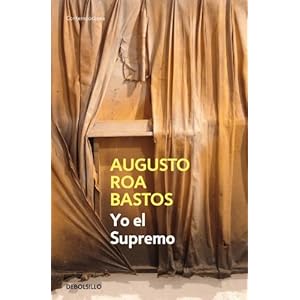
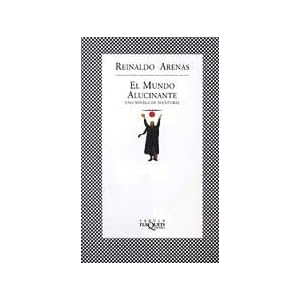
The process of being selected to translate a book - at least for me, back then - was similar to the process my actor friends were going through: I had to "audition" with translated sample pages, and if an editor liked them, he or she would sign Colchie's author and attach me as translator. I had a number of auditions, and discovered a number of authors, including the late Reinaldo Arenas (best known for Before Night Falls), who wrote two books that I consider hidden gems, if not minor masterpieces: El Mundo Alucinante (Hallucinations) and Celestino Antes del Alba (Celestino Before the Dawn).
 I was so taken with the character of Celestino, that I began to imagine the character as a franchise! I've written the first successor to Arenas' novel, in the form of a short story: "Celestino in the Lemon Yellow Nova."
Similar to the books about Africa I talked about in a previous post, my love affair with the "magical realist" style of writing made it possible for me to figure out a naturalistic way for the character of Hawk, protagonist of The Shell, to slip effortlessly from one realm to another and back again....

No comments:
Post a Comment